Key Takeaways
- Local SEO helps small businesses appear in Google search results and Google Maps when nearby customers search for what they offer — it’s the most cost-effective lead channel for most local service businesses.
- The average cost-per-lead from local SEO ($20–$40) is less than half the cost from Google Ads ($55–$110), making it one of the highest-ROI marketing investments for businesses with a physical location.
- Local SEO pricing runs $300–$5,000+ per month in 2026, with most small businesses investing $500–$2,000 depending on competition level and the number of locations.
- You can do local SEO yourself — Google Business Profile optimization, citation consistency, and local content are all learnable without an agency — but it costs real time.
- ChatGPT can assist with local SEO tasks like drafting content, generating title tags, and brainstorming keywords, but it can’t crawl your site, pull live data, or replace strategy built on real ranking signals.
What Is Local SEO for Small Businesses?
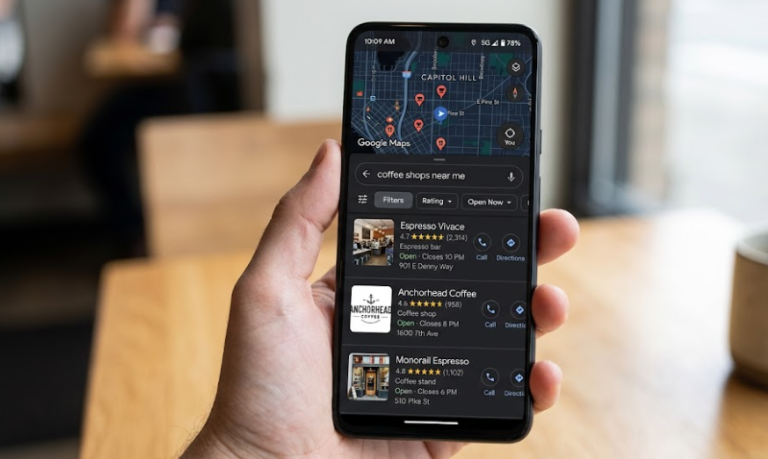
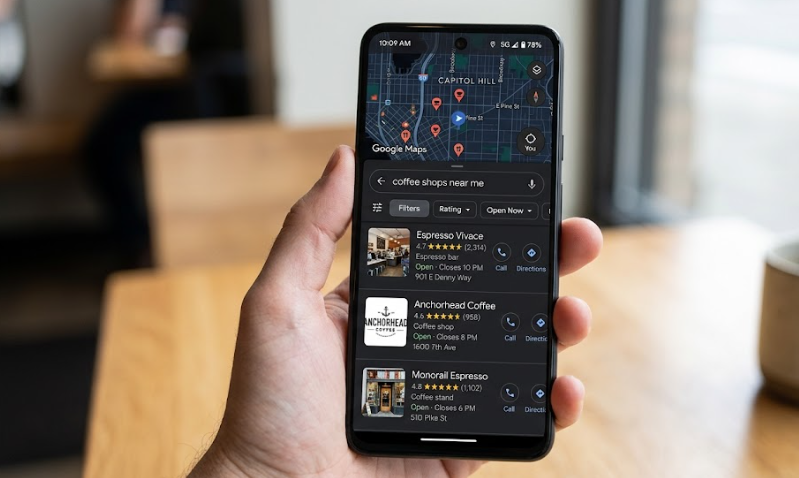
Local SEO is the process of optimizing a small business’s online presence to appear in search results when nearby customers search for the products or services it offers — specifically in Google’s local search results (the “map pack”) and standard organic results filtered by location. 96% of people discover nearby businesses through online searches, and a large share of them later make a purchase, which is why local search visibility has become one of the most direct lead drivers for any business serving customers in a specific geographic area.
The core elements of local SEO include a fully optimized Google Business Profile, consistent business name/address/phone number (NAP) across directories and citations, location-specific content on the website, and a steady flow of customer reviews signaling trust and relevance to search algorithms.
Why Local SEO Matters More Than Most Small Businesses Realize
The average cost-per-lead from local SEO ($20–$40) is less than half that of Google Ads ($55–$110) and a fraction of traditional advertising ($100–$200+). 75% of small businesses report local SEO generates more leads than paid advertising — which makes it the highest-volume lead channel at the lowest cost-per-lead for businesses with a local footprint. Once established, local rankings continue generating leads without the ongoing spend that paid advertising requires to stay visible.
How Much Does Local SEO Cost for a Small Business?
Local SEO costs range from $300 to $5,000+ per month in 2026 — price differences reflect real differences in scope, strategy, and provider quality.
A practical breakdown by tier:
Basic Local SEO: $300–$800 per month — best for low-competition industries or businesses that only need foundational improvements.
Growth-focused campaigns: $800–$2,000 per month — suitable for businesses in moderately competitive markets wanting to build citations, content, and review velocity alongside GBP optimization.
Competitive markets: $2,000–$5,000+ per month — reflects the additional content, link-building, and multi-location work required to compete in dense metro areas or high-competition industries like law, medical, and home services.
Most businesses allocate 1% to 10% of their total marketing budget to local SEO, meaning a company with a $100,000 marketing budget would typically spend $500 to $1,250 per month on local SEO services.
The single largest driver of where your price lands is market competition — a plumber in a small rural market with 5 competitors faces a fundamentally different challenge than a plumber in a major metro with 200 competitors all investing in local SEO.
One honest flag worth noting: the days of $300/month “full local SEO” packages delivering real results are largely behind us. Low-cost packages at the very bottom of the range often cover only GBP analysis without actionable recommendations, leaving the actual improvement work undone.
Can I Do Local SEO Myself?
Yes, and for many small businesses in less competitive markets, a DIY approach covers the highest-leverage work effectively. The core tasks that move the needle most — and that any business owner can learn — are:
Google Business Profile optimization
Your GBP is the single highest-impact local SEO lever available. Completing every section, choosing accurate categories, uploading regular photos, and posting weekly updates are all owner-manageable tasks that directly influence map pack visibility.
Citation consistency
Ensuring your business name, address, and phone number match exactly across Google, Yelp, Apple Maps, Facebook, and major directories prevents the inconsistency signals that suppress local rankings.
Review velocity
Actively asking satisfied customers for Google reviews, and responding to every review received, builds the trust and activity signals that local search algorithms weight heavily.
Location-specific content
Service pages and blog content that mention your city, neighborhood, and service area explicitly help Google understand the geographic context of your business.
While tools can keep citation data consistent and track your local rankings, they don’t replace strategy, copywriting, or technical expertise. Running the tools yourself also costs your time. If your time is better spent running your business, the managed approach often delivers better ROI despite the higher dollar cost.
How to Get a Local SEO Strategy in Place
A practical starting sequence for any small business:
- Claim and fully complete your Google Business Profile. Every uncompleted section is a ranking signal left on the table.
- Audit citation consistency across major directories. Tools like BrightLocal or Whitespark identify mismatches that suppress local rankings.
- Add location-specific pages to your website. One page per service area or location, each with locally relevant content rather than generic copy pasted across pages.
- Build a review generation system. A simple post-service follow-up email or text asking for a Google review, done consistently, compounds over time.
- Create and publish local content regularly. Blog posts and service updates that reference your city and neighborhood increase the geographic relevance signals Google reads.
Can ChatGPT Do SEO?
ChatGPT and other AI tools are genuinely useful for specific local SEO tasks — but they can’t do local SEO independently, and treating them as a replacement for strategy built on real data leads to generic output that doesn’t outrank anyone.
What AI tools do well for local SEO: drafting location-specific page copy, generating title tag and meta description options, brainstorming local content topics, rewriting thin service page content, and creating FAQ sections based on common customer questions. Quality agencies also include GEO (Generative Engine Optimization) for AI search platforms like ChatGPT and Google AI Overviews in 2026, which means appearing in AI-generated answers has become an additional local visibility consideration alongside traditional Google rankings.
What AI tools can’t do: crawl your site to identify technical issues, pull live ranking or citation data, analyze your specific competitive landscape, or build the authority signals (reviews, links, citations) that local algorithms actually weight. ChatGPT also has a knowledge cutoff and can’t tell you what keywords your local competitors are currently ranking for or what Google’s latest local ranking algorithm changes reward.
The practical framing: AI is a production accelerator for local SEO content and copy tasks, not a strategy tool or a substitute for the tools, data, and expertise that competitive local rankings actually require.
Common Mistakes When Starting Local SEO
- Ignoring Google Business Profile in favor of the website — the GBP is often a more direct ranking lever than on-site changes, especially for map pack visibility.
- Inconsistent NAP information across directories — even a small difference in address format between platforms creates conflicting signals that suppress local rankings.
- Treating reviews as passive — actively asking for reviews consistently is one of the highest-leverage ongoing local SEO actions, not something that happens automatically.
- Buying the cheapest local SEO package available — low-cost packages at the very bottom of the market often skip the actual optimization work that produces rankings.
- Treating AI tools as a complete SEO solution — using ChatGPT to draft local content is valuable; relying on it to replace real keyword research, competitive analysis, and authority-building is not.
Wrapping Up
Local SEO remains one of the highest-ROI marketing investments for small businesses with a local customer base, largely because a well-optimized local presence keeps generating leads without the ongoing spend that paid advertising requires. Whether you manage it yourself or hire an agency, the starting point is the same: a fully optimized Google Business Profile, consistent citations, and a system for generating reviews consistently — three things that compound quietly and are entirely within a small business owner’s control.
Frequently Asked Questions
What is local SEO for small businesses?
Local SEO is the process of optimizing a small business’s online presence to appear in Google’s local search results and Google Maps when nearby customers search for its products or services — it’s the most cost-effective lead channel for most businesses with a physical location.
How much does local SEO cost for a small business?
Local SEO costs an average of $500 to $3,000 with some small businesses paying around $1,000 per month, though packages range from $300/month for basic foundational work in low-competition markets up to $5,000+/month in competitive metro areas.
Can I do local SEO myself?
Yes — Google Business Profile optimization, citation consistency, review generation, and local content are all learnable and doable without an agency. The real cost is time, and in competitive markets the execution demands often outpace what an owner can manage alongside running the business.
How do you get a local SEO strategy in place?
Start with a fully completed Google Business Profile, audit citation consistency across major directories, add location-specific pages to your website, build a consistent review-asking process, and publish local content regularly — in roughly that priority order.
Can ChatGPT do SEO?
ChatGPT handles specific local SEO production tasks well — drafting location page copy, generating title tag options, brainstorming content topics. It can’t crawl your site, pull live ranking data, analyze your competitive landscape, or build the authority signals local rankings actually require.
About the Author