Choosing the right mountain bike often begins with one key question: hardtail or full suspension? Both have their advantages and are built for different riding styles, terrains, and rider preferences. Whether you’re just starting out or upgrading your current setup, understanding the differences between these two types of bikes will help you make a smart investment.
This guide breaks down everything you need to know about hardtail and full suspension bikes—from terrain performance to maintenance and long-term value.
What Is a Hardtail Mountain Bike?
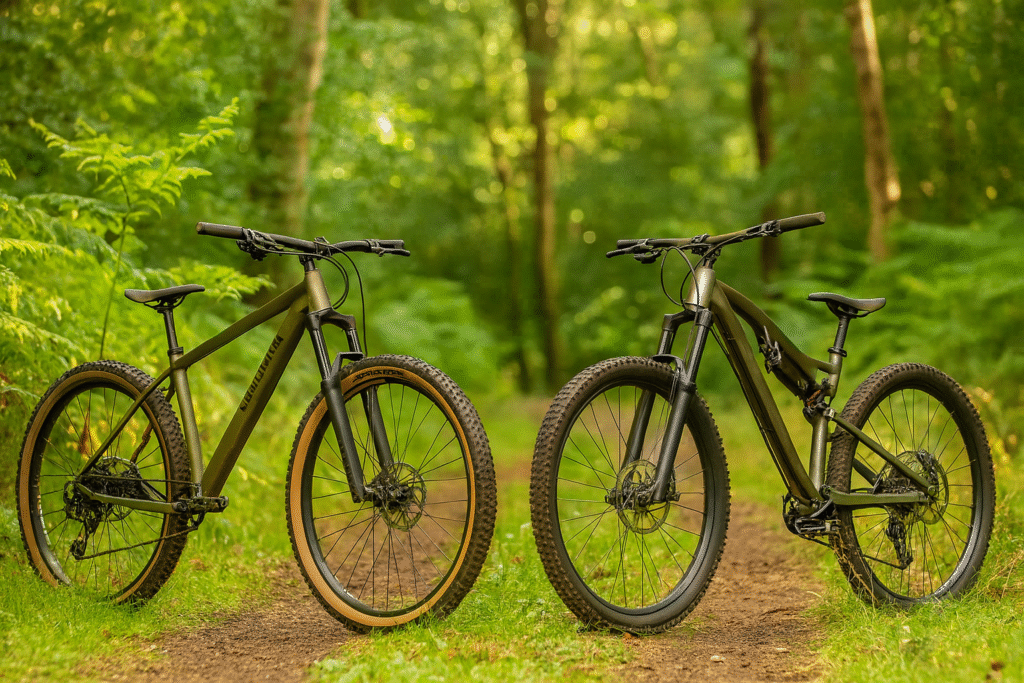
A hardtail mountain bike features a suspension fork at the front but no rear suspension. The rear triangle of the frame is rigid, which makes hardtails lighter, more mechanically efficient, and typically more affordable than their full suspension counterparts.
Key Benefits:
- Pedaling Efficiency: With no rear suspension to absorb your pedaling force, hardtails are generally more efficient when climbing or riding on smooth trails.
- Weight Advantage: Hardtails are lighter—by about 1 to 3 kilograms—making them ideal for cross-country and long-distance rides.
- Lower Maintenance: Fewer moving parts mean less can go wrong. They’re easier to maintain and less costly in the long run.
- Affordability: You can get a higher-spec hardtail for the same price as a lower-end full suspension bike.
Best For: Beginners, smooth terrain, cross-country trails, and budget-conscious riders.
What Is a Full Suspension Mountain Bike?
A full suspension bike features both front and rear suspension, providing a more cushioned and controlled ride. The rear shock helps absorb impacts from rough trails, rocks, and drops.
Key Benefits:
- Superior Control: Rear suspension offers better traction and control, especially on technical or downhill terrain.
- Increased Comfort: Rear shock reduces fatigue on long rides by absorbing bumps and impacts.
- Confidence Booster: Makes it easier to ride over obstacles, boosting confidence for beginners and pros alike.
Tradeoffs: Heavier, more expensive, and requires regular maintenance of the rear shock and pivots.
Best For: Technical trails, downhill descents, enduro riding, and riders who prioritize comfort and control.
Hardtail vs. Full Suspension: Head-to-Head Comparison
| Factor | Hardtail | Full Suspension |
| Weight | Lighter (by 1–3 kg) | Heavier due to rear shock |
| Climbing | More efficient on smooth climbs | Slight loss of efficiency |
| Trail Performance | Good on mild terrain | Excellent on rough terrain |
| Comfort | Moderate | High |
| Maintenance | Easier and cheaper | More complex, higher upkeep |
| Price | More affordable | Higher cost, more features |
Which One Should You Choose?
Terrain Matters
- Hardtail: Best for flat trails, gravel paths, and light off-road use.
- Full Suspension: Excels on rocky, root-filled, and technical terrain where comfort and traction matter.
Rider Experience & Style
- Beginners may benefit from a hardtail to learn basic bike control and trail feedback.
- Experienced riders or those tackling tough trails may prefer the added support and performance of a full suspension.
Budget Considerations
- Entry-level hardtails offer good specs under $1,500.
- Full suspension bikes tend to start at a higher price point but can offer better performance if budget allows.
Maintenance & Longevity
- Hardtails require fewer repairs and part replacements.
- Full suspension bikes need regular tuning and care, especially the rear shock and linkage.
Long-Term Goals
- Start with a hardtail to build skills, then upgrade as you tackle more complex trails.
- If you plan to hit the bike park or ride downhill, go straight to full suspension.
Pro Tips for Choosing
- Test Ride Both: Try them on your usual trail types to feel the difference.
- Prioritize Fit & Feel: A well-fitted hardtail beats a poorly sized full suspension.
- Consider Used Models: You might find a better-spec full suspension bike within your budget.
- Don’t Overbuy: Match your bike to your current and realistic future needs.
Frequently Asked Questions
Which is better for climbing hills, hardtail or full suspension?
Hardtails are generally more efficient for climbing because there’s no rear suspension absorbing your energy.
Can I ride a hardtail on rough trails?
Yes, but it requires more skill and may be less comfortable. Riders often choose full suspension for aggressive terrain.
Is full suspension worth the extra money?
If you ride rough, technical trails regularly, then yes. The comfort and control are often worth it.
Are hardtails better for beginners?
Many beginners start with hardtails to learn proper technique, though full suspension can help with confidence on tough trails.
What about long-term value?
Hardtails offer better value if you ride casually or on easy trails. Full suspension offers better performance longevity for aggressive riders.
Conclusion
Choosing between a hardtail or full suspension mountain bike depends on your riding style, terrain preference, skill level, and budget. Hardtails are ideal for efficient, lightweight, and cost-conscious riding, while full suspension bikes offer unmatched comfort and control for technical terrain.
About the Author