Key Takeaways
- Local SEO services help businesses with a physical location or service area show up in Google Maps results and local search, not just national organic rankings.
- Typical pricing runs $300–$2,500/month depending on competition, number of locations, and review/citation cleanup needed.
- Paying for SEO is worth it for most local businesses when the agency can show a clear path from rankings to actual calls, bookings, or foot traffic — not just keyword positions.
- SEO isn’t dead in 2026, but it has changed: AI Overviews and zero-click answers now handle a meaningful share of searches, and Google still drives the majority of traffic businesses get from search.
- Nothing has fully “replaced” SEO — instead, it has expanded to include AI search visibility (sometimes called AEO or GEO) alongside traditional ranking factors.
What Are Local SEO Services?
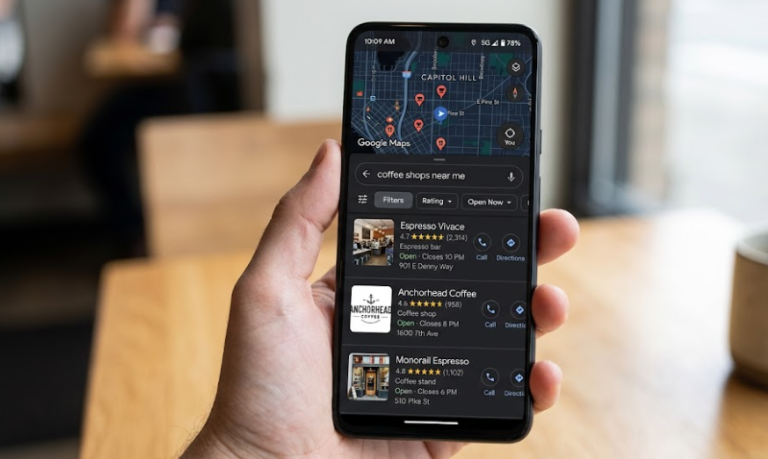
Local SEO services are a specialized form of search engine optimization aimed at getting a business found by nearby customers — in Google Maps, the local “map pack,” and location-based search results — rather than ranking nationally for broad terms. If you run a dental practice, a plumbing company, or a restaurant, local SEO is the discipline that gets you in front of “near me” searches and location-specific queries.
This differs meaningfully from general SEO. A national e-commerce brand cares about ranking for a product term across the whole country; a local business cares about showing up when someone three miles away searches for what they offer, right now. That means the tactics — Google Business Profile optimization, local citations, review management, location pages — are different from a typical content-and-backlinks SEO program.
Why It Matters Right Now
Most local purchase decisions start with a phone in hand, not a desktop browser, and a large share of those searches happen with immediate intent — someone needs a plumber today, not next month. Businesses that aren’t visible in the map pack for their core services are effectively invisible to that entire segment of demand, no matter how good their actual service is.
At the same time, the local search results page itself has gotten more crowded — paid ads above the map pack, AI-generated summaries, and review widgets all compete for the same screen real estate. Standing out now requires more than a basic Google Business Profile listing; it requires consistent citations, a steady flow of recent reviews, and content that actually answers what local customers are searching for.
What Does a Local SEO Agency Actually Do?
A local SEO program generally includes:
- Google Business Profile (GBP) optimization — accurate categories, service areas, photos, posts, and Q&A management to maximize map pack visibility.
- Citation building and cleanup — ensuring your business name, address, and phone number are consistent across directories like Yelp, BBB, and industry-specific listings.
- Review generation and management — systems to request reviews from happy customers and respond to all reviews, since review volume and recency directly influence map rankings.
- Local content and location pages — service-area pages and blog content targeting location-specific search terms (“emergency plumber in [city]”).
- On-site technical SEO — making sure the website itself loads fast, works on mobile, and has the right schema markup (LocalBusiness schema, in particular) to help Google understand your location and services.
A good local SEO agency will treat reviews and GBP activity as a continuous task, not a one-time setup — both factors change weekly and have an outsized impact on whether you show up in the map pack at all.
How Much Does Local SEO Cost?
Local SEO pricing tends to be lower than national/enterprise SEO, since the scope is narrower, but it still varies by competition and footprint:
- Single-location, low-competition market (e.g., a small town service business): roughly $300–$800/month
- Single-location, competitive market (e.g., a dentist in a mid-size city): roughly $800–$2,000/month
- Multi-location businesses: often priced per location, typically $200–$500/location/month on top of a base management fee
- One-time GBP audit and citation cleanup: usually a flat $500–$2,000 project fee
Be cautious of agencies quoting flat low rates (under $300/month) for highly competitive local markets — that price point usually doesn’t cover enough hands-on work to move rankings meaningfully, and the engagement often becomes “set it and forget it” rather than ongoing optimization.
Is It Worth Paying Someone to Do SEO?
For most local businesses, yes — but the honest answer depends on your time, your market’s competitiveness, and whether you can commit to doing the work consistently yourself if you skip the agency. SEO isn’t a one-time fix; it’s an ongoing process of citation upkeep, review generation, and content updates that competes against other businesses doing the same thing.
Paying for SEO tends to be worth it when: your competitors are actively investing in their own visibility, you don’t have the time to manage GBP and citations weekly, or your past DIY attempts have stalled. It’s less worth it if your local market has minimal competition and a basic, accurate GBP listing alone is enough to dominate the map pack — in that case, a one-time setup might be all you need rather than an ongoing retainer.
Is SEO Dead or Evolving in 2026?
SEO is not dead in 2026, but it has genuinely changed shape. AI Overviews and other AI-generated answers now resolve a meaningful share of searches directly on the results page, and a growing portion of research-style queries are moving to conversational AI tools instead of a traditional search box. For local businesses specifically, though, the core mechanics — appearing in the map pack, having strong reviews, ranking for “near me” intent — remain largely intact, because those queries tend to have clear local intent that AI summaries don’t fully satisfy on their own (a user asking for “the best plumber near me” still typically wants to see and choose an actual local listing).
What’s actually happening is an expansion of the discipline rather than a replacement: businesses now need to be visible both in traditional search results and in AI-generated answers, since those AI tools largely pull their information from the same indexed, well-optimized content that ranks well in regular search. A business with strong local SEO fundamentals — accurate listings, consistent citations, real reviews, helpful content — tends to perform well in both environments, not just one.
What’s Replacing SEO?
Nothing has fully replaced SEO — what’s happening is that search has expanded into more surfaces, and SEO has expanded along with it. The closest thing to a “successor” is a set of practices sometimes called AEO (answer engine optimization) or GEO (generative engine optimization), which focus on structuring content so AI tools can extract and cite it accurately.
For local businesses, this mostly means making sure your Google Business Profile, website, and content are detailed and accurate enough that AI tools surface your business correctly when summarizing local options — clear service descriptions, accurate hours and locations, and FAQ-style content that directly answers common local questions. It’s an addition to local SEO fundamentals, not a separate strategy that replaces them.
Common Mistakes Local Businesses Make With SEO
- Inconsistent business information across listings — even small discrepancies in address formatting or phone numbers can hurt map pack rankings.
- Ignoring reviews until there’s a problem, instead of building a steady, ongoing review-generation habit.
- Treating GBP as “set and forget” rather than posting updates and responding to Q&A regularly.
- Targeting only the city name in content, missing neighborhood-level and service-area-specific search terms customers actually use.
- Hiring a generalist agency with no local-search experience, when local SEO genuinely requires different tactics than national SEO.
How to Improve Your Local SEO: Step-by-Step
- Claim and fully complete your Google Business Profile, including categories, service areas, hours, and photos.
- Audit your existing citations for consistency across major directories and fix mismatches.
- Set up a simple review request system so happy customers are asked to leave a review after every job or visit.
- Build location or service-area pages for each area you genuinely serve, with unique content for each.
- Add LocalBusiness schema markup to your website to help search engines and AI tools understand your location data.
- Track map pack rankings and call/lead volume monthly, not just keyword position, since calls and bookings are the real goal.
- Revisit and refresh GBP posts and Q&A at least monthly to stay active in Google’s eyes.
Conclusion
Local SEO services remain one of the highest-ROI investments available to businesses that depend on nearby customers, even as the broader search landscape shifts toward AI-driven answers. The fundamentals — accurate listings, consistent citations, real reviews, and locally relevant content — are what both Google’s traditional results and its AI features rely on, so getting them right pays off in either environment.
Frequently Asked Questions
What are local SEO services?
Local SEO services help businesses with a physical location or service area rank in Google Maps and local search results, typically covering Google Business Profile optimization, citation management, reviews, and location-specific content. They’re distinct from general SEO, which focuses on broader, non-location-based rankings.
How much does a local SEO cost?
Local SEO typically costs $300–$800/month for low-competition single-location businesses, $800–$2,000/month in competitive markets, and roughly $200–$500 per additional location for multi-location businesses. One-time audits or cleanup projects usually run $500–$2,000.
Is it worth paying someone to do SEO?
For most local businesses with real competition, yes — paying for SEO is worth it when you don’t have time to manage citations and reviews consistently, or when competitors are actively investing in their own visibility. It’s less necessary in low-competition markets where a basic, accurate listing is enough to dominate.
Is SEO dead or evolving in 2026?
SEO is evolving, not dead. AI Overviews and conversational AI tools now handle a growing share of searches, but local intent searches still rely heavily on traditional local search signals like Google Business Profile data and reviews, which remain central to local visibility.
What’s replacing SEO?
Nothing is fully replacing SEO — it’s expanding to include AI search visibility, sometimes called AEO or GEO, alongside traditional ranking factors. Businesses with strong, accurate, well-structured local SEO fundamentals tend to perform well in both traditional search and AI-generated answers.
About the Author