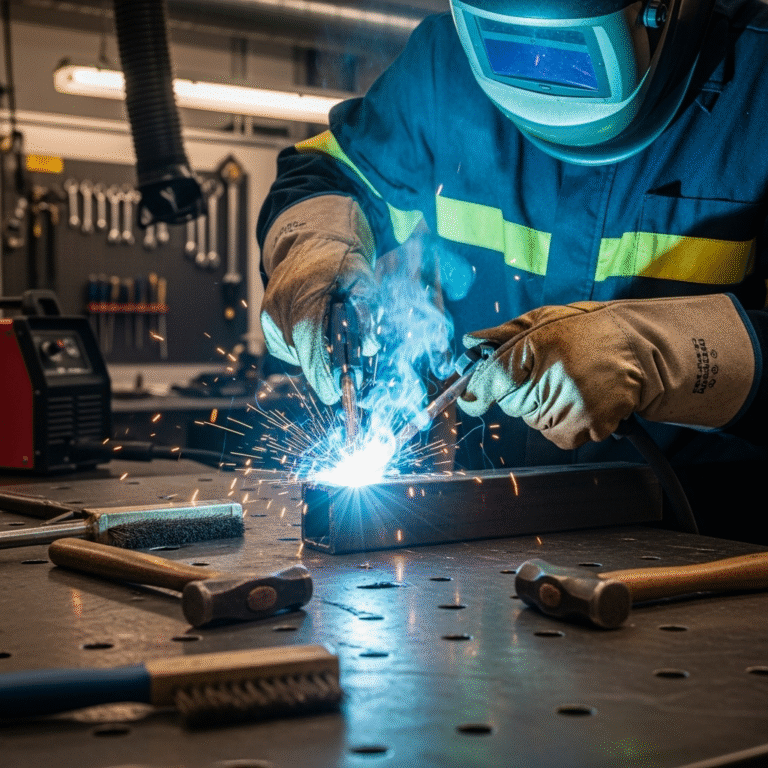
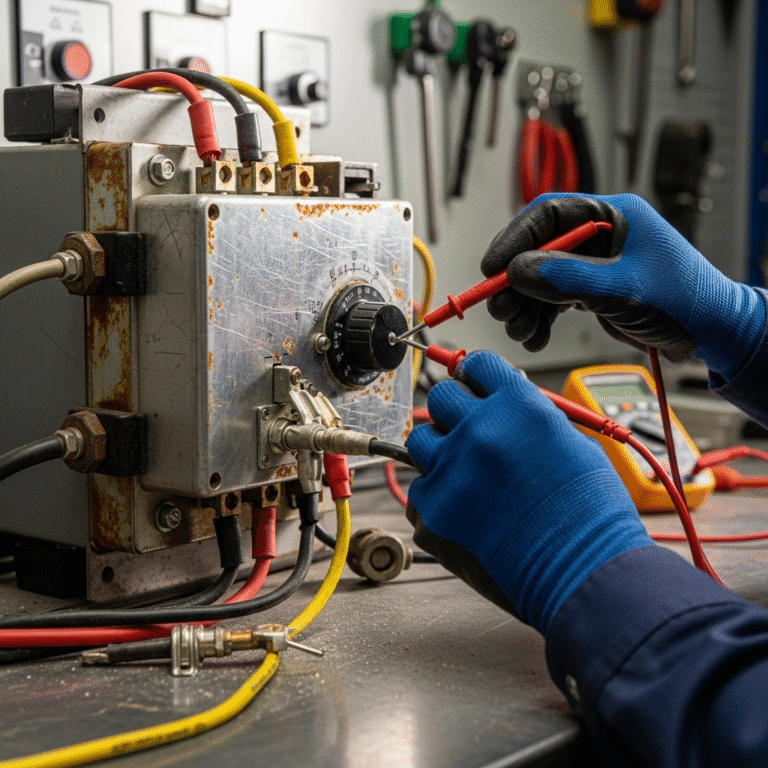
Fusion welding is a foundational technique in modern manufacturing. From assembling cars and airplanes to building bridges and pipelines, this method of joining metals is used across industries for its strength, versatility, and efficiency. Whether you’re a student, an engineer, or a curious DIYer, understanding how fusion welding works and why it’s widely adopted is essential.
In this guide, we’ll cover the fusion welding process, explore the most common types, outline its benefits and limitations, and provide insights into its practical applications.
Understanding Fusion Welding

Fusion welding is a process that joins two or more pieces of metal by melting their edges and allowing them to cool and solidify into a single, strong joint. It often involves a filler metal to bridge the gap between the base materials. What sets fusion welding apart from other welding methods is that it relies entirely on heat—not pressure or mechanical force—to make the connection.
This is in contrast to solid-state welding, which does not melt the base materials. Instead, it joins them through pressure, friction, or ultrasonic energy. Fusion welding is ideal for applications requiring deep penetration, strong bonds, and compatibility with a wide range of metals.
How Fusion Welding Works

The Role of Heat
Fusion welding involves elevating the temperature of the base metals beyond their melting point, creating a molten state that allows them to fuse together upon cooling. Achieving this requires a high-intensity heat source capable of concentrating energy precisely at the weld site. The choice of heat source depends on the material, thickness, desired weld quality, and the working environment. Common heat sources include:
- Electric arc: The most common method, it generates intense heat through an electrical discharge between an electrode and the workpiece, ideal for processes like MIG and TIG welding.
- Gas flame: Combustion of gases such as acetylene and oxygen provides a controllable flame used in oxy-fuel welding, particularly suitable for cutting and brazing.
- Laser beam: Offers pinpoint accuracy and minimal thermal distortion, making it ideal for precision tasks in electronics and aerospace.
- Electron beam: Operated in a vacuum, this method delivers high-penetration welds with extreme focus and minimal contamination, often used in aerospace and high-tech industries.
Filler Metals and Molten Pool

In many fusion welding methods, a filler metal is used to create a stronger and more resilient joint between the base materials. The filler metal is typically selected to match or complement the properties of the metals being joined, ensuring compatibility in strength, ductility, and corrosion resistance.
As welding progresses, the heat from the process causes the filler metal to melt and flow into the joint, where it combines with the molten edges of the base metals. This mixture forms a homogeneous molten pool, often referred to as the weld pool, which must be carefully controlled to avoid defects such as porosity or undercutting.
When the heat source is removed, the molten pool begins to cool and solidify. The rate of cooling, influenced by the material and ambient conditions, plays a critical role in determining the grain structure and mechanical properties of the weld. A properly executed weld results in a joint that is not only strong but also durable under mechanical and thermal stress.
Shielding from Contaminants
To prevent oxidation and contamination of the molten metal during fusion welding, protective measures are essential. When molten metal is exposed to the atmosphere, it can react with oxygen, nitrogen, or hydrogen, resulting in defects such as porosity, brittleness, or inclusions in the weld. To combat this, two primary shielding methods are employed:
- Shielding gases: Inert or semi-inert gases like argon, helium, and carbon dioxide are directed around the weld area to displace atmospheric gases. For instance, argon is commonly used in TIG welding due to its stable arc properties and low reactivity, while CO₂ is often used in MIG welding for cost-effectiveness.
- Flux coatings: Used primarily in stick welding, these coatings decompose during welding to produce gases and slag. The gas forms a protective barrier around the arc, and the slag solidifies over the weld pool, shielding it from air as it cools. This slag must later be removed but plays a critical role in maintaining weld integrity.
These shielding methods ensure a cleaner weld with minimal contamination, contributing to better mechanical properties and visual quality.
Common Types of Fusion Welding Processes
MIG Welding (Gas Metal Arc Welding)
- Uses a continuously fed wire electrode
- Shielded by inert or semi-inert gas
- Fast and easy to learn
- Common in automotive and construction industries
TIG Welding (Gas Tungsten Arc Welding)
- Uses a non-consumable tungsten electrode
- Ideal for thin materials and precise welds
- Common in aerospace and high-performance applications
Stick Welding (Shielded Metal Arc Welding)
- Uses a consumable electrode coated in flux
- Highly portable and simple
- Common in pipeline welding and outdoor environments
Submerged Arc Welding (SAW)
- Automatic process using a continuously fed wire and granular flux
- High deposition rates
- Used in heavy manufacturing like pressure vessels
Advanced Methods
- Laser Beam Welding: High-precision, low-distortion welding for electronics
- Plasma Arc Welding: Narrow, deep welds with excellent control
Which Metals Can Be Fusion Welded?
Fusion welding can join a wide range of metals, including:
- Carbon and stainless steels
- Aluminum and its alloys
- Copper and nickel alloys
- Titanium
Material compatibility, melting points, and oxidation tendencies are key factors when selecting welding processes.
Advantages of Fusion Welding
- High strength: Produces durable and reliable joints
- Versatility: Works with various metals and thicknesses
- Efficiency: Can be automated for high-volume production
- Precision: Especially in methods like TIG and laser welding
- Clean finish: Minimal finishing required
Limitations and Risks of Fusion Welding
- Distortion and warping due to intense heat
- Defects such as porosity, cracking, and slag inclusion
- Heat-affected zones (HAZ) that can alter metal properties
- Requires skill and control to maintain quality
- Energy-intensive, especially with advanced techniques
Where Is Fusion Welding Used? (Applications by Industry)
Automotive
- MIG welding for frames, exhausts, and body panels
- Robotic systems ensure repeatable, high-speed welding
Aerospace & Aviation
- TIG welding for aluminum structures, turbine blades
- Laser welding for precision components
Infrastructure & Construction
- Structural steel, rebar, bridges, and high-rise buildings
Shipbuilding and Offshore
- Stick and SAW for hulls and marine-grade joints
- Resistant to water and salt corrosion
Electronics & Medical
- Laser and plasma welding for micro-joints in devices and implants
Fusion Welding vs Other Joining Techniques
| Technique | Fusion Welding | Brazing & Soldering | Solid-State Welding |
| Uses Heat? | Yes | Yes (lower temp) | No |
| Melts Base Metal? | Yes | No | No |
| Strength | High | Medium | High |
| Applications | Structural | Electronics, HVAC | Aerospace, Precision |
Safety in Fusion Welding
- Wear protective clothing, gloves, and auto-darkening helmets
- Ensure proper ventilation to avoid inhaling harmful fumes
- Use fume extractors or welding booths
- Maintain and inspect equipment regularly
- Follow OSHA and ANSI safety guidelines
The Future of Fusion Welding
- Automation: AI-controlled robotic arms for faster and precise welds
- Sensors: Real-time monitoring for defect prevention
- Sustainability: Lower energy processes and eco-friendly gases
- Space and underwater welding: Expanding welding into extreme environments
- Additive manufacturing: 3D printing with fusion welding layers
FAQs: What People Also Ask About Fusion Welding
What is the main advantage of fusion welding?
The main advantage of fusion welding is that it creates strong, permanent joints by fully melting and bonding the base metals, making it ideal for demanding applications like construction and manufacturing.
Is welding hard at first?
Yes, welding can be difficult at first because it requires steady hands, good coordination, and understanding of techniques, but with practice and proper training, it becomes much easier to learn.
How do I identify a good weld?
A good weld can be identified by its clean, even appearance, lack of defects like cracks or holes, proper penetration, and overall strength without gaps or weak spots.
What metals can be fused in welding?
Metals that can be fused in welding include steel, stainless steel, aluminum, copper, nickel alloys, and titanium, although each one may require different welding methods and precautions.
Conclusion
Fusion welding remains a cornerstone of modern manufacturing and construction due to its ability to produce strong, permanent joints across a wide variety of metals. From MIG and TIG to advanced laser techniques, each method serves a specific industrial need. Despite some limitations, the benefits in strength, efficiency, and adaptability continue to drive innovation in this field. As industries embrace automation and sustainability, fusion welding will only grow more critical in shaping the future of global infrastructure and technology.
About the Author